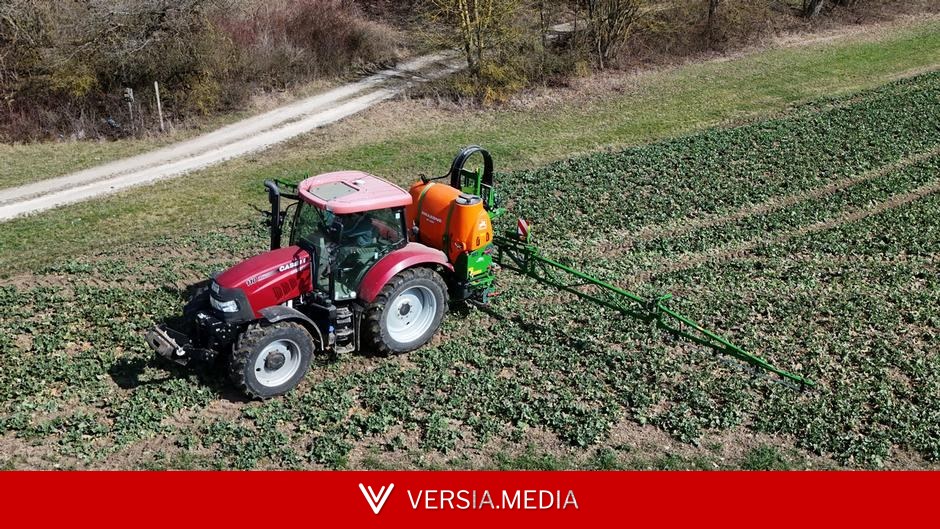
EU's Pesticide Reduction Goal Falters After Binding Targets Abandoned
With mandatory reduction targets eliminated, the European Union's commitment to cutting pesticide usage in half is losing momentum—even as contentious substances such as glyphosate continue to be available for sale throughout the bloc.
Three years ago, the European Union appeared to be taking a firm stance on pesticides. Roughly 40% of the bloc's citizens had voiced worries about detecting them in their food, and over one million individuals were demanding a gradual elimination. Reflecting the mood of the moment, the European Parliament was scheduled to vote on a binding proposal to cut pesticide usage by half by 2030—using the 2015-2017 average as a reference point.
"Without these changes, we risk pollinator and ecosystem collapse which will have even greater impacts on food security and food prices," Stella Kyriakides, the former EU commissioner for health and food safety, stated at that time.
Now, in 2026, the bloc has permanently abandoned the mandatory reduction regulation. Furthermore, in an attempt to ease regulatory burdens on businesses, the European Commission, the EU's executive arm, is currently contemplating granting permanent approval for most pesticides.
This shift toward relaxing controls has encountered opposition from advocacy groups. Manon Rouby from Pesticide Action Network International stated it would weaken "the link between pesticide use and the impact it has on human health."
DW has examined how the usage, sales, and effects of pesticides evolved before and after the EU abandoned its binding 50% reduction target.
### Historical Usage and Sales of Pesticides in the EU
The EU's attempts to limit pesticide usage trace back to at least 2009, when the union adopted its first directive encouraging sustainable practices. It recommended that these substances be employed only as a last option.
However, the outcomes were modest. In 2020, the European Court of Auditors determined that the policy implementation was failing to meet reduction objectives. This conclusion prompted the European Commission to first propose the mandatory 50% cut, which was put to a vote in 2023.
Both then and now, the EU remains among the top 10 global pesticide users among countries with significant croplands. This is despite an 18% decline compared to 2015—based on estimates from the UN's Food and Agriculture Organization.
Yet the picture differs at the national level. Since no comparable EU data on pesticide usage per country exists, sales figures are used as a substitute. In 2024, the most recent year with available data, the top five purchasing nations showed an increasing trend, with sales nearly 10% higher than in 2023, when the reduction target was still in place.
These five nations—Spain, France, Italy, Germany, and Poland—which are also the EU's leading agricultural producers, accounted for 76% of total sales in 2024.
The reversal in policy priorities "is a reflection of the EU in general being very reluctant to put restrictions to farmers in a way that comes as burdensome," said Lindsey Hendricks-Franco, an environmental researcher at the German think tank Ecologic Institute. She added that non-binding targets are unlikely to lower usage.
### Pesticide Sales Rose in 2024, Including Hazardous Types
Pesticide sales surged in several EU countries in 2024, compared to the 2015-2017 average baseline. They increased by roughly a quarter in Bulgaria and Austria, but growth was more modest in Estonia, Latvia, and Lithuania. Sales dropped in 20 EU member states. Italy, the EU country with the highest reduction rate, decreased its sales by 33%.
Although 14% lower than in 2015, overall 2024 pesticide sales were 8% higher than the previous year, when the mandatory reduction target was still being considered.
Hendricks-Franco noted that while pesticide sales would probably not have fallen by 50% had the obligatory cut been adopted, they would likely have been reduced "by more than the current trend."
The decline over the 2014-2024 decade was smaller for a subset of highly hazardous pesticides, known for their potentially harmful effects on people and the environment. By 2024, the most recent reporting year, sales of these hazardous substances had increased by 27% in total compared with the previous year—largely driven by higher sales in Spain, Poland, Hungary, Lithuania, and Slovakia.
Among these chemicals is glyphosate, a controversial pesticide linked to cancer risk and miscarriage. While the EU claims the use of hazardous pesticides has decreased, glyphosate sales rose by more than 44% between 2015 and 2024.
### Risks of Using Pesticides
Since the sales volume of pesticides does not account for toxicity and application rates, it reveals little about the risks to people and the environment. Pesticides have been associated with biodiversity loss and have been found to be extremely harmful to fish and other species.
When present in groundwater and soils, these chemicals damage bees, birds, and aquatic life, according to a 2022 UN report. Yet their residue in many European rivers far exceeds the EU's safe thresholds established since 2000 for each individual pesticide.
Only Lithuania and Slovenia reported staying within the recommended levels of pesticides in rivers in 2023. Sweden showed the highest reduction for residues. It went from double the recommended limit in 2018—the first year with comparable data for most EU countries—to 7% above the threshold five years later.
Over the same period, Denmark, Latvia, and Hungary recorded rising concentrations. In 2023, pesticide residue in rivers in these countries exceeded the safe thresholds by 50% or more.
### Why the 50% Reduction Proposal Was Not Passed
Against this backdrop of 19 out of 27 EU member states already exceeding pesticide thresholds designed to protect the environment and human health, the European Parliament proceeded with the November 2023 vote on the proposal to cut future pesticide use in half.
But it was rejected, with 299 votes against and 207 in favor. Among those who did not support the proposal were the Greens and left-wing groups, who argued the text had been weakened in key areas.
"It was just not a text that we could in good conscience vote for," Sarah Wiener, a Green Party lawmaker from Austria, wrote in a press release at the time, adding that it was "very weak. Especially when it comes to the protection of public health and biodiversity as well as support for farmers."
Since that vote, the European Commission's focus has shifted from reducing pesticides to cutting bureaucratic hurdles for companies, for example by lowering administrative costs. In late 2025, they introduced a new proposal that would involve automatically approving most pesticides without reassessing their safety after their initial approval period.
Hendricks-Franco of the Ecologic Institute said the idea means "pesticides that are risky will stay on the market longer," adding that it sends a message from the EU "that health risks are no longer pressing."
The European Commission has argued that fewer regulatory burdens will make it easier to bring more low-risk pesticides onto the market. And that, said Eva Hrncirova, the commission's spokesperson, will lead to a shift "away from more hazardous chemical substances."
The EU is one of the 196 signatories of the Global Biodiversity Framework, which is committed to halving the environmental risks from pesticides by 2030.
"There are worries and questions as to how this is compatible with the new developments that we see at the EU level," said Rouby of the Pesticide Action Network.
Edited by: Gianna-Carina Grün and Tamsin Walker
Fact check: Eva Lopez
For data, code and methodology behind this analysis, see this GitHub repository. More data-driven stories from DW can be found here.
This project was partially funded by the European Data Journalism Network (EDJnet) in context of ChatEurope.