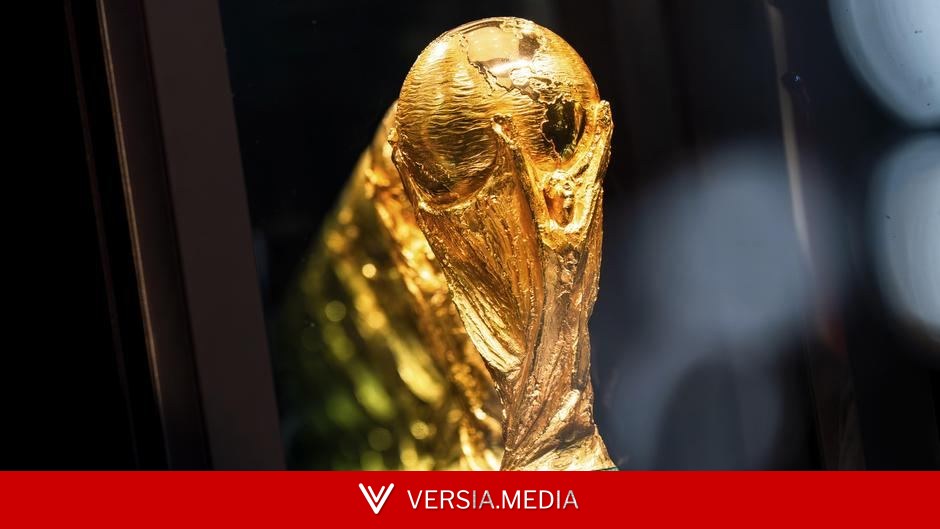
The 2026 World Cup: Larger Scale, Uncertain Quality – Key Facts
**1. Three Host Nations with Strained Relations**
For the first time, the World Cup will be co-hosted by three countries: the United States, Canada, and Mexico, departing from the traditional single-nation format. The only prior exception was in 2002, when Japan and South Korea jointly hosted the tournament. Historically, these three nations have maintained strong ties, but tensions have escalated since US President Donald Trump commenced his second term. His proposals to make Canada the "51st" US state and the imposition of punitive tariffs have dampened relations between two long-standing allies. Meanwhile, US-Mexico relations have been frayed by disputes over their shared border and Trump's implicit threats to deploy military force against drug cartels operating within Mexico.
**2. Expanded Teams and Matches**
With 48 participating teams, the tournament will feature a dramatic increase in matches—104 in total, compared to 64 during the 2022 World Cup in Qatar, which involved only 32 nations. The opening game is scheduled for June 11 in Mexico City, where Mexico will face South Africa.
The competition will consist of 12 groups of four teams, up from eight groups four years ago. The top two teams from each group, along with the eight best third-place finishers, will advance to a round of 32. This additional knockout stage has been introduced to gradually reduce the field before the final on July 19 in New Jersey.
The larger format has opened doors for debutants: Cape Verde, Curacao, Jordan, and Uzbekistan will all appear in a World Cup for the first time—a boon for their supporters. However, critics worry that the increased number of teams may dilute the overall quality of play.
**3. Mandatory Hydration Breaks**
Although hydration breaks are not unprecedented in football, FIFA has announced that all World Cup matches will include two such breaks, occurring approximately 22 minutes into each half, regardless of weather conditions. Previously, referees were required to call cooling breaks 30 minutes into each half only when the kickoff temperature exceeded 31 degrees Celsius (87.8 degrees Fahrenheit). This change responds to concerns about high temperatures expected in several host cities, as was observed during last summer's Club World Cup in the US.
Conveniently for broadcasters, FIFA has confirmed they may cut away from matches to air commercials during these three-minute intervals. This addresses a challenge that frustrated US broadcasters during the 1994 World Cup and effectively divides matches into quarters—similar to two of the most popular televised sports in the United States: basketball and American football.
**4. Human Rights Issues**
A March report from Amnesty International cautioned that the World Cup presents "significant risks and impacts for fans, players, journalists, workers, and local communities alike." The report is most critical of the United States, which will host the majority of matches, describing the situation there as a "human rights emergency" and highlighting what it calls a "recognizable pattern of authoritarian practices." It specifically raises concerns about the conduct of ICE immigration agents deployed to certain states.
Amnesty also noted that Mexico has mobilized 100,000 security personnel, including military forces, in response to high levels of violence within the country. Regarding Canada, the report expressed fears that homeless populations could be further marginalized, particularly in host cities Vancouver and Toronto, and pointed to restrictions on the right to freedom of peaceful assembly.
**5. High Travel and Ticket Costs**
The vast distances involved make travel expensive even for fans based in North America. The farthest apart venues are Vancouver and Miami, separated by 4,507 kilometers (2,800 miles). For instance, a German fan hoping to follow their team would need to travel 2,619 kilometers from Houston to Toronto to New Jersey just for the group-stage matches.
Ticket prices have sparked such controversy that the fan organization Football Supporters Europe (FSE) has filed a lawsuit against FIFA with the European Commission, citing "excessive ticket prices" for games. Top-tier tickets for the United States' opening match against Paraguay in Los Angeles were listed at $4,105 (€3,499), while for some less popular games, the cheapest seats were priced at $380. FIFA's own resale platform, FIFA Marketplace, recently advertised tickets to the final for over $2 million each.
FIFA President Gianni Infantino defends the pricing, pointing to the availability of lower-cost tickets for loyal national team fans through their federations. Speaking in Los Angeles, Infantino noted that high prices simply reflect demand in an expensive market. "And if somebody buys a ticket for the final for $2 million, I will personally bring him a hot dog and a Coke to make sure that he has a great experience," he pledged.
**6. The Iran Question**
Iran has qualified for its seventh World Cup, but participation has seemed fraught from the outset. Iran is one of four qualified nations whose citizens face complete or partial travel bans to the United States, where all its group-stage matches will be held. Under Trump's executive order, teams, their coaches, and support staff are exempt, but this does not appear to extend to Iranian FA officials.
Earlier this year, the United States and Israel initiated a conflict with Iran, and the Iranian FA threatened to "boycott" its matches in the US. Trump later stated that, "for their own life and safety," it would be inappropriate for Iran to attend. Mexico has since agreed to an arrangement where the team will be based there, crossing the border only for its two matches in Los Angeles and one in Seattle.
*Edited by: Matt Pearson*