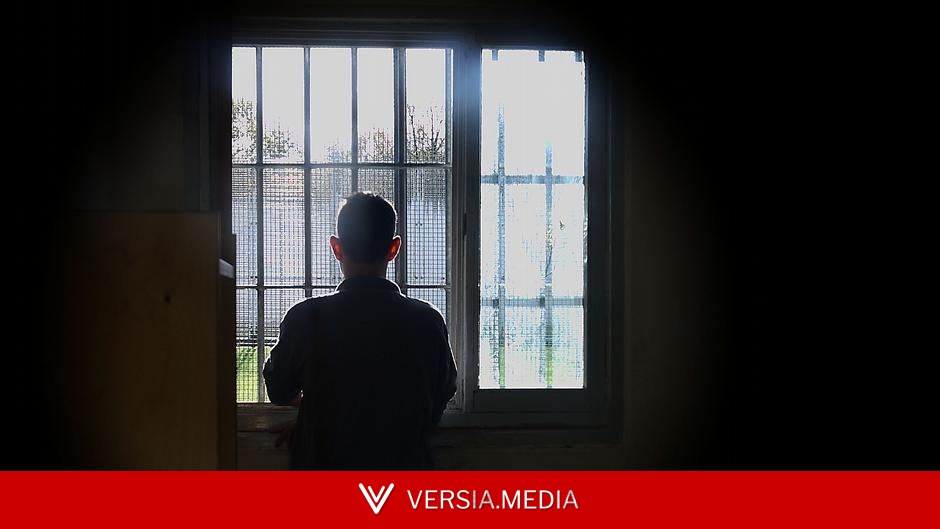
In the battle against rising gang crime, Sweden's parliament is set to vote on proposals to make 13-year-olds criminally liable and, in severe instances, incarcerate them. Other European countries are also reducing their age thresholds.
Children aged 13 and 14 ought to be attending school. However, in Sweden, young teenagers are being enlisted by criminal gangs to execute attacks and contract murders—even carrying out shootings in broad daylight.
Under Swedish legislation, individuals under 15 are not criminally accountable, a loophole exploited by organized crime and gang members who frequently operate covertly. Under current rules, children cannot be convicted as criminals; instead, they come under the purview of social services and child welfare agencies.
But in its effort to combat escalating gang violence and organized crime, Sweden aims to strengthen its legal arsenal. Parliament has already passed a measure enabling 15- to 17-year-olds convicted of serious crimes to serve prison terms in specially designed juvenile facilities.
Furthermore, the government intends to lower the age of criminal responsibility to 13 on a trial basis for particularly grave offenses. This would cover crimes like murder, manslaughter, serious bombings, or other infractions with very high minimum sentences.
Parliament will vote on this reform in mid-June, and the outcome will be reassessed after five years.
Swedish gangs recruiting teenage hit men
To view this video please enable JavaScript, and consider upgrading to a web browser that supports HTML5 video
Denmark: A failed model?
The discussion over the age of criminal responsibility is not confined to Sweden.
In 2010, Denmark reduced the age of criminal responsibility from 15 to 14 under a conservative administration. Two years later, the reform was overturned. Studies indicated that the lower age threshold had no deterrent effect. On the contrary, affected youths were more prone to reoffend and performed worse academically.
As a result, Denmark is now regarded by many experts as a cautionary example. Criminalizing children at a younger age does not automatically address the issue of youth violence. In the worst-case scenario, contact with the criminal justice system can even pull young people deeper into criminal circles.
Netherlands: Prosecution from age 12, but no adult jails
Compared to other EU nations, the Netherlands and Ireland have some of the lowest ages of criminal responsibility. In the Netherlands, children can be prosecuted from the age of 12.
In Ireland, the general age of criminal responsibility is also 12. However, for the most serious offenses—including murder, manslaughter, rape, and aggravated sexual offenses—children as young as 10 or 11 can be held criminally accountable.
A low age threshold does not automatically mean severe prison sentences akin to those in the adult justice system. In the Netherlands, the maximum juvenile detention term for 12- to 15-year-olds is one year. For 16- and 17-year-olds convicted of serious crimes, the maximum juvenile sentence is generally two years, with only limited exceptions. Education, supervision, and rehabilitative measures also remain the primary focus, even during detention.
Sweden steps up the fight against organized crime
To view this video please enable JavaScript, and consider upgrading to a web browser that supports HTML5 video
In Germany and Spain, a child who commits a serious crime at the age of 12 is not legally responsible. That does not mean the state is powerless. Youth services, family courts, and protective measures can step in. In certain circumstances, secure placement is possible—but not as a criminal punishment in the legal sense.
The child is treated not as an offender, but as a minor in a risky situation. This emphasis is particularly evident in Spanish law. Children under 14 do not fall under juvenile criminal law, but rather within the framework of child protection.
Rising numbers of teenagers behind bars in Italy
Another approach focuses more on the child's environment. Italy’s so-called Caivano Decree increases pressure on parents who neglect supervision and school attendance obligations. In cases of severe truancy, parents can even face criminal consequences.
However, Italy is not purely a countermodel to the Swedish approach. The decree has also toughened juvenile justice. Meanwhile, critics note that since its introduction, the number of young people in juvenile detention has risen significantly.
For many EU countries, the age of 14 remains the central benchmark. Austria also adheres to this standard. Children under 14 are not criminally responsible. Yet offenses can still have repercussions, such as meetings with police and parents, warnings, involvement of youth services, or educational measures.
A low age of criminal responsibility in Europe does not automatically mean adult-style punishment. Juvenile courts, specialized facilities, educational interventions, and protective measures are generally the priority.
What does the science say?
Europe's widespread reluctance to punish very young people broadly aligns with research in developmental psychology. Children and young adolescents are more responsive to immediate rewards, peer pressure, and emotional recognition. Impulse control, weighing long-term consequences, and planning ahead are skills that only develop gradually.
As a result, traditional deterrence has limited effectiveness among 13-year-olds. The prospect of a future prison sentence competes with immediate rewards like money, recognition, a sense of belonging, or having a role to play. In other cases, it may compete with the child's fear of a gang.
For this reason, experts caution against trying to combat youth crime solely through lower ages of criminal responsibility and harsher penalties.
Gangs quickly rethink their strategies
There is also a practical concern: criminal organizations adapt quickly. If Sweden lowers the age of criminal responsibility for serious offenses to 13, gangs may try to recruit even younger children. In that case, the problem would not be solved—rather, even younger children could become targets for criminal networks.
The key question is not only at what age a child can be punished. Equally important is whether the state can crack down on the adults who direct and organize these crimes.
Many experts are skeptical that the Swedish government's plans will achieve their intended goal. Sweden's parliamentary justice committee, the bar association, and several civil society organizations have voiced strong criticism of the proposal. If parliament approves the measure, 13-year-olds could face prison sentences as early as late summer.
This article was originally written in German.