The 2026 World Cup has faced backlash even before the first match. Criticism is increasing regarding US President Donald Trump's travel restrictions, costly ticket prices, the tournament's expansion to 48 teams, and its ecological footprint.
**1. Shouldn't FIFA, football's governing body, remain politically impartial?**
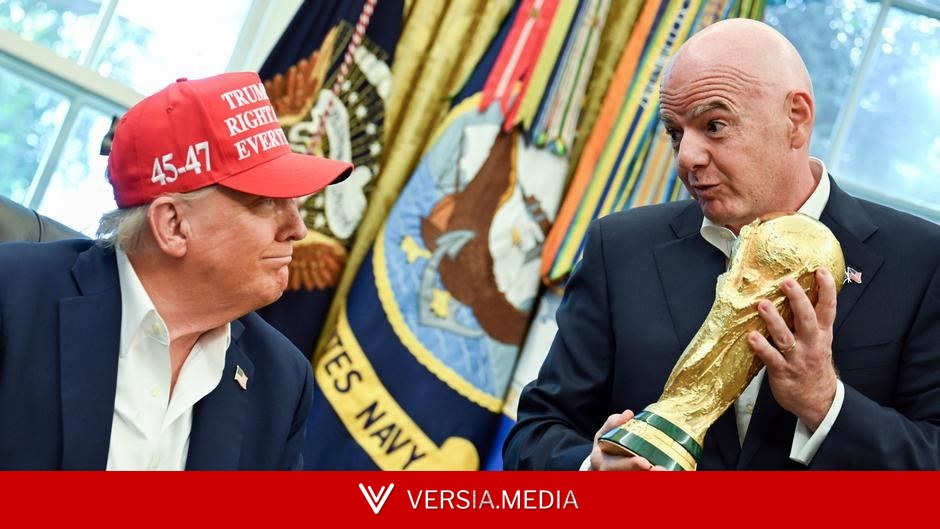
In the period leading up to the 2026 World Cup, FIFA President Gianni Infantino grew unusually close to US President Donald Trump.
This involved appearing on stage in a red USA baseball cap during the president's Board of Peace meeting and awarding Trump the newly established "FIFA Peace Prize" during the World Cup draw.
FIFA's own regulations require it to maintain political neutrality. Yet, Infantino has given the impression that he is intentionally intertwining global sports politics with the interests of a single nation.
For the first time, a World Cup host country is engaged in a military conflict with one of the participating teams, as the United States is at war with Iran.
**2. Shouldn't all supporters be able to watch their team's matches?**
US entry policies are also attracting severe criticism. Tightened visa requirements effectively prevent fans from several participating countries from attending. For Iran and Haiti, a full entry ban for spectators is in place—only the teams and their support staff are permitted to enter the nation.
It will also be nearly impossible for fans from Senegal and the Ivory Coast to attend games, as tourist visa issuance for citizens of these countries has been mostly halted—partly because, in the past, many travelers from these nations overstayed their visas in the US. At one stage, the US government imposed a security deposit of up to $15,000 (€12,874) for visitors from certain countries, a sum to be refunded after their departure. This measure was lifted for many ticket holders shortly before the tournament began.
US immigration policies and the potential for actions by Immigration and Customs Enforcement (ICE) officers are creating a sense of anxiety. Ahead of the event, the US government declined to rule out the possibility of checks or arrests near World Cup stadiums.
**3. Should a match ticket really cost $690,000?**
Ticket prices at the start of sales were exceptionally high; many seats were sold for thousands of dollars each, while premium tickets for the final initially cost around $11,000.
FIFA employs "dynamic pricing," where prices vary significantly based on demand. Even within the same sales period, fans pay different amounts for identical seats.
Additionally, there are reports that buyers, despite selecting a specific category or location within the stadium, have received tickets for inferior seats. Fan organizations and consumer protection groups accuse FIFA of price gouging, a lack of transparency, and unfair sales practices, and have lodged a formal complaint with the European Union. The attorneys general of the US states of New Jersey and New York have launched investigations into FIFA's ticketing.
With just weeks to go before the opening game, very few matches had sold out. As of May 28, the cheapest ticket for the final available on FIFA's website was listed at $8,625. A seat in wheelchair areas was going for a minimum of $10,350. The very last available seat—located in the front row of a section near one of the corner flags—was listed for $690,000.
In addition to official ticket sales, FIFA operates its own resale platform, taking a 30% cut of every transaction. Critics argue that many fans have been priced out of the tournament.
**4. Shouldn't only the finest teams compete at the World Cup?**
This World Cup will feature 48 teams instead of 32. Consequently, the number of matches will increase from 64 to 104. Experts and many fans fear this could dilute the sporting quality of the tournament.
At the same time, advancing to the knockout stage has become easier, as not only the top two finishers from each of the 12 preliminary groups will qualify, but also the eight best third-placed teams. Due to the number of teams, a round of 32 has been added.
Some observers view this reform as a politically motivated decision: smaller football associations—whose votes carry significant weight within FIFA—stand to benefit most from the allocation of additional spots. This raises the question of Infantino's motives for pushing through this expansion. Was it primarily to consolidate his power base within football's global governing body?
**5. Wasn't this tournament meant to be sustainable and climate-friendly?**
Although FIFA has publicly championed the causes of sustainability and climate protection, the 2026 World Cup is facing heavy criticism due to its environmental impact. Studies estimate that the tournament will generate more than nine million tons of carbon dioxide, primarily due to the distances between host cities and the high volume of air travel involved. Environmental organizations have labeled this event potentially the "most climate-damaging World Cup" in history.
The problem persists at the local level as well. Many stadiums are located in the suburbs and in some cases there is little or no public transportation available. Where public transportation is available, some prices have skyrocketed; a short train ride to MetLife Stadium from New York was originally set to cost up to $150 (compared to the standard fare of around $13). Following protests from fans, the organizers eventually lowered the price to $98. The shuttle bus service is now scheduled to cost $20, down from the previously proposed $80. Those driving to the stadium face high parking costs at many venues, ranging from $75 to $300, depending on the game. At least at stadiums with expensive parking, there is usually an affordable public transit alternative.
Critics say all this means that despite FIFA's climate pledges, many fans will be forced to undertake environmentally harmful—and expensive journeys.
This article was originally published in German.