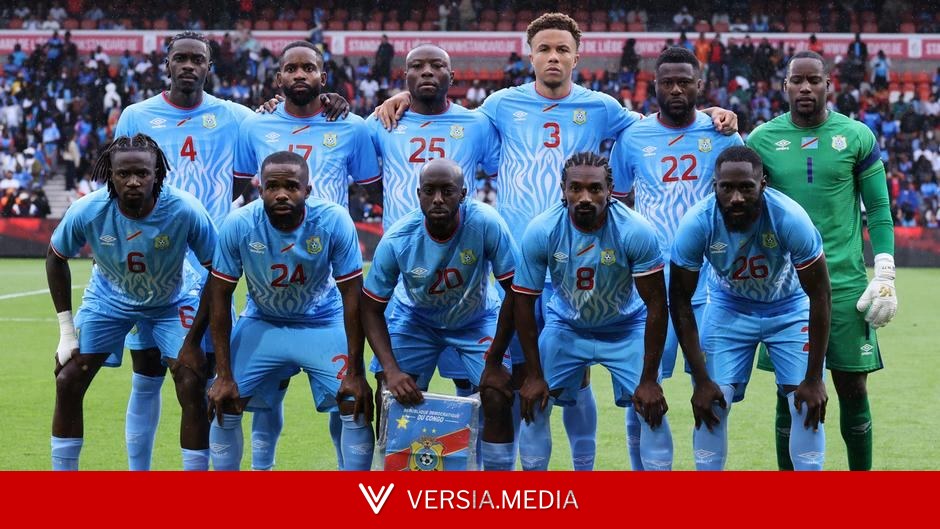
While ticket costs, extreme heat, and political issues have dominated headlines, Ebola has been a major concern for DR Congo at the World Cup. The African nation has qualified for the first time in 52 years, but does the outbreak carry broader consequences?
The Ebola outbreak in the Democratic Republic of Congo, specifically the Bundibugyo virus disease, has already resulted in 91 fatalities in the country.
The most recent figures from the World Health Organization, released on June 6, indicate 515 confirmed cases in the nation and 19 in neighboring Uganda, where at least two deaths have occurred.
Isabel Brosius, an infectious disease expert from the Institute of Tropical Medicine in Antwerp, Belgium, is currently in DR Congo. She informed DW that the outbreak is devastating a country already plagued by conflict in its eastern region and multiple other significant public health challenges.
"Ebola can be a very frightening disease. So certainly, when this occurs in a population that isn't always highly health-literate, it's a deeply alarming situation. People start questioning why this is happening or what caused it. And then if there is a deep-seated distrust in the government or other entities, along with fake news or misleading messages, it only amplifies the overall feeling of insecurity," she stated.
Has Ebola impacted the World Cup yet?
DR Congo secured their World Cup spot for the first time in 52 years back in April, but their preparations for their opening match against Portugal on June 17 have been disrupted by the Ebola outbreak.
World Cup hosts the United States, where DR Congo is set to be based, require all non-US citizens who have been in DR Congo, Uganda, or South Sudan to spend 21 days outside those countries and remain symptom-free before being allowed entry into the US.
Even though the outbreak is currently limited to Ituri Province in the country's northeast, the squad's training camp, originally planned for the capital Kinshasa, thousands of kilometers away in the west, was relocated to Belgium. There, the team trained in a COVID-19-style "bubble." All of DR Congo's players play their club football abroad, and reports indicate none have recently visited the affected areas.
A pre-tournament friendly against Chile, initially scheduled to take place in Spain, will now be held behind closed doors in the French city of Orleans on Tuesday, after Spanish local authorities blocked the original match on public health grounds. With many teams already in North America, DR Congo's arrival in Houston will give them relatively limited time to adjust.
"The only thing I can say is that we're accustomed to adapting, and whatever happens, we'll have no trouble adjusting to all these situations," DR Congo coach Sebastien Desabre remarked.
Is there a risk of Ebola spreading at the World Cup?
According to Brosius, the risk is almost nonexistent. She stressed that Ebola is "not transmitted through airborne droplets and requires close contact with a sick or deceased person or their contaminated environment," making international spread or transmission through travel highly improbable.
"Just as we observed in 2014-2016 with the largest Ebola outbreak we've ever seen, the potential for international spread and establishing local transmission in other countries via air travel, etc., is actually quite limited."
"The likelihood that random fans attending a match in one of the three host countries or the players come into contact with it is, in my view, close to zero," she added.
What is the stance of the World Cup hosts on Ebola?
Cohosts the US, Canada, and Mexico recently issued a joint statement on the issue. It emphasized "coordinated public health travel measures for individuals arriving from African regions at highest risk for the Ebola virus," without providing many specifics.
While the US has enforced the 21-day rule, Canada has temporarily banned residents of the DRC, Uganda, and South Sudan from entering the country for 90 days, and Mexico has implemented stricter Ebola screening procedures at airports and mandated the 21-day quarantine.
What is the situation for World Cup fans from DR Congo?
Tournament organizers FIFA have stated they are monitoring the disease's spread, but the quarantine restrictions mean very few fans will be able to travel, even if they can afford a ticket.
What makes this Ebola outbreak different
To view this video please enable JavaScript, and consider upgrading to a web browser that supports HTML5 video
As a result, Veron Mosengo-Omba, president of DR Congo's football federation (FECOFA), has asked FIFA to reimburse affected fans.
"We asked FIFA if it is possible to take this into account, because the tickets are somewhat expensive," he told the BBC. "They are being penalized because they cannot get [into the United States] to see the World Cup and support their team.
"We don't want our supporters who love football, who love the World Cup, to lose everything."
FIFA has said they will examine the matter "in due course," according to the BBC.
Edited by: Chuck Penfold