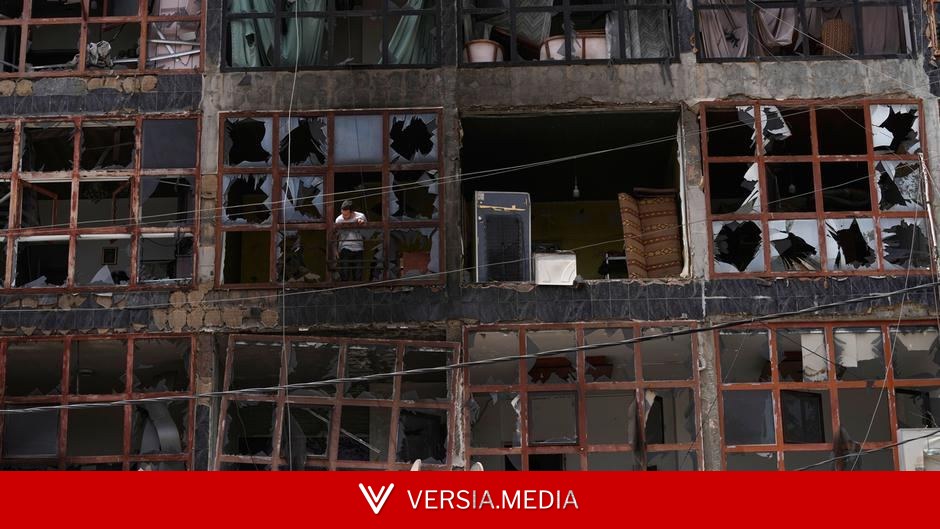
Israel and Lebanon prepare for a fresh round of negotiations in Washington. Iran says negotiating groups to oversee sanctions, nuclear issues, economic reconstruction and implementation. DW has the latest.
What you need to know
Israel , Lebanon to start a new round of talks in Washington
US-Iran technical talks in Switzerland have concluded, Iranian media reports
Iran reiterates it will maintain control over Strait of Hormuz
Here are the latest developments on the Iran war and the wider Middle East on Tuesday, June 23:
Tired of missing our real-time updates? Click here to add us as a Preferred Source on Google . Then tap the "Star" or "Preferred" to keep DW News at the top of your feed.
Tehran says IAEA not scheduled to see nuclear sites bombed by US
International Atomic Energy Agency (IAEA) inspectors are not scheduled to see the nuclear sites bombed by the United States last year, Tehran said on Tuesday.
Esmail Baghaei, a Foreign Ministry spokesperson, was talking to reporters in Tehran when he made this comment.
On Monday, US Vice President JD Vance said that Iran had agreed to allow in nuclear inspectors.
"That is a major milestone for the American people and the first step in permanently denuclearizing or permanently ending a nuclear weapons program in Iran," he said.
US President Donald Trump followed this with a post on Truth Social saying, "Everybody is fully aware that Iran will agree to have Major Weapons Inspections in order to ensure 'Nuclear Honesty' long into the future."
IAEA Director General Rafael Grossi has pushed for Iran to allow inspectors to view damaged nuclear sites that were hit by US and Israeli attacks.
Iran says to retain control of Strait of Hormuz
Tehran said that Iran will retain the administration of the Strait of Hormuz and that it will "never" go back to pre-war days, state media reported on Tuesday.
"Everyone should know that the administration of the Strait of Hormuz will never go back to the way it was before the war," Iran's chief negotiator Mohammad Bagher Ghalibaf said in an interview, according to IRNA.
"Of course, international regulations will be observed, but Iran will administer the Strait of Hormuz."
This is in direct contrast to US President Donald Trump's demand of an unconditional reopening of the strait to marine traffic.
Since the interim peace deal between the US and Iran, ship traffic in the important waterway had picked up, but Tehran's announcement on Saturday it had closed it again in response to Israeli attacks in Lebanon raised questions regarding its long-term plan.
It also remains unclear whether Tehran plans to charge vessels to cross Hormuz.
Passage was free through the strait , which borders both Iran and Oman, before the war, but Iran last month established a new governmental authority to collect money from ships. Tehran has said it still expects vessels to register with the Persian Gulf Strait Authority before crossing.
The closure of the strait during the Iran war choked a major supply route and sent global oil prices soaring, fueling inflation.
Shipowners hope Strait of Hormuz will reopen soon
To view this video please enable JavaScript, and consider upgrading to a web browser that supports HTML5 video
US-Iran technical talks conclude, Iranian media reports
Technical talks between Iran and the United States in Switzerland ended with a proposal to set up negotiating groups on nuclear issues and sanctions, Iran's state media said on Tuesday.
According to IRNA state news agency, Deputy Foreign Minister Kazem Gharibabadi said the envoys "decided that four working groups would be established: Sanctions Termination, Nuclear Affairs, Reconstruction and Economic Development, and Monitoring and Implementation."
New round of talks between Israel, Lebanon in US
Israel and Lebanon are due to start their fifth round of talks in Washington DC on Tuesday, as the fragile ceasefire in Lebanon seems to be holding for now.
Lebanon was drawn into the wider Middle East conflict in early March, when the Iran-backed Hezbollah militant group attacked Israel, in retaliation for the US-Israeli attacks on Iran. Israel responded with strikes across the country and later invaded the south, where Israeli soldiers remain stationed.
Beirut has sought the US-mediated talks with Israel as a means to secure peace. Lebanese leaders, including President Joseph Aoun, maintain that Tehran cannot negotiate on Beirut's behalf.
Still, the interim peace agreement between the United States and Iran calls for ending all hostilities, including in Lebanon , a key condition of Tehran which it has on more than one occasion halted negotiations over.
Fighting in Lebanon has abated since Saturday night , a significant development which earlier rounds of Lebanon-Israel talks failed to sustainably secure.
Israel is not a party to the US-Iran peace agreement.
Israeli Prime Minister Benjamin Netanyahu said on Monday the Israeli military will keep its "freedom of action" against Hezbollah in southern Lebanon.
"Iran wanted us to withdraw from it but I stood firm," Netanyahu said. "We are keeping our freedom of action and we are keeping the security zone to protect" citizens in northern Israel.
Beirut has maintained that Israeli withdrawal from its territories was a prime goal of the talks.
Israeli strikes kill at least 20 people in Lebanon
To view this video please enable JavaScript, and consider upgrading to a web browser that supports HTML5 video
Welcome to our coverage
Hello! Here are the latest updates regarding the peace efforts between the US and Iran, as well as other events relating to the wider Middle East conflict and the ongoing efforts to resolve it.
On Tuesday, Iranian state media reported that technical talks with Washington in Switzerland have concluded. Meanwhile, Israel and Lebanon are due to start a new round of talks in Washington.
Earlier on Monday:
US waived Iran oil sanctions for 60 days
US Vice President JD Vance cited the existance of a 'foundation' for a successful final deal, adding that Iran had agreed to nuclear IAEA inspections
Mediator Pakistan said the US and Iran agreed on a roadmap toward a final deal within 60 days
For more, make sure you stay tuned to our liveblog.